
Table of Contents
Introduction
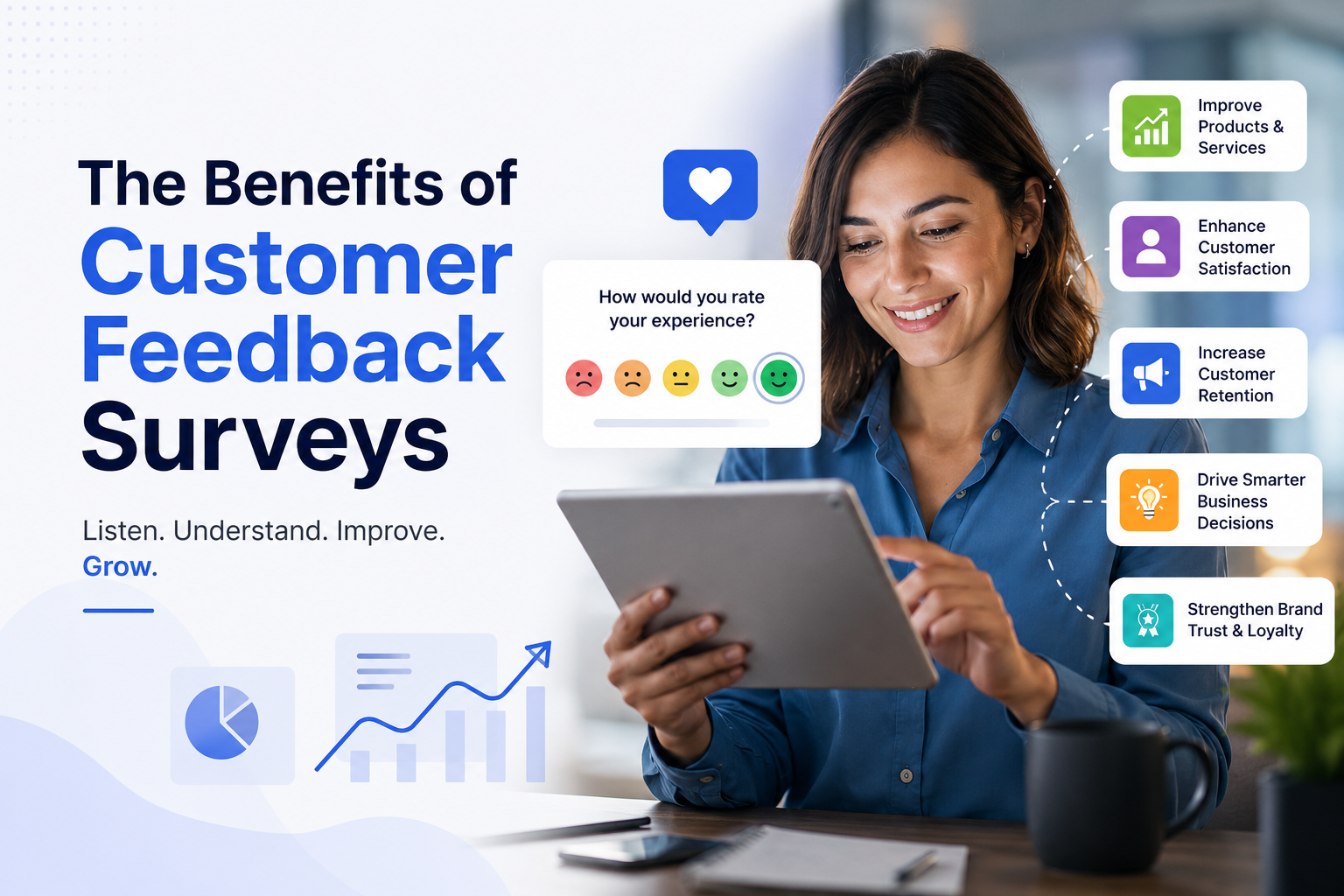
Understanding customers has never been more important in today’s competitive marketplace. One of the most effective ways to gain valuable insights is through customer feedback surveys. The benefits of customer feedback surveys extend far beyond collecting opinions—they help businesses improve products, enhance customer experiences, increase loyalty, and drive long-term growth.
Whether you run a small business, manage an e-commerce store, or lead a large enterprise, customer feedback surveys provide direct access to what your audience thinks and expects. As digital transformation continues to shape industries, organizations increasingly rely on survey tools and customer experience technologies to make data-driven decisions.
This guide explores the benefits of customer feedback surveys, how they work, the tools available, practical applications, challenges, and future trends.
What Are the Benefits of Customer Feedback Surveys?
The phrase “benefits of customer feedback surveys” refers to the advantages businesses gain by collecting structured feedback from customers through questionnaires, forms, polls, and digital surveys.
Customer feedback surveys allow companies to:
- Understand customer satisfaction levels
- Identify strengths and weaknesses
- Improve products and services
- Build stronger customer relationships
- Make informed business decisions
- Increase customer retention
Definition and Background
Customer feedback surveys have been used for decades, evolving from paper questionnaires to sophisticated online platforms. Modern businesses now use digital survey tools that provide real-time analytics, automation, and integration with customer relationship management (CRM) systems.
The rise of customer-centric business models has made feedback surveys a critical component of successful growth strategies.
Purpose and Relevance in the Business and Tech Community
In the technology and business sectors, customer feedback is considered one of the most valuable data sources. Companies use survey insights to:
- Develop better products
- Improve user experiences
- Reduce churn rates
- Launch successful features
- Strengthen brand loyalty
The benefits of customer feedback surveys are especially important for software companies, e-commerce brands, service providers, and startups seeking rapid improvement.
Key Features of Customer Feedback Surveys
Modern customer feedback surveys include several powerful features that make them effective and easy to use.
Multiple Survey Formats
Businesses can choose from various formats, including:
- Customer satisfaction (CSAT) surveys
- Net Promoter Score (NPS) surveys
- Customer Effort Score (CES) surveys
- Product feedback surveys
- Post-purchase surveys
- Website feedback forms
Real-Time Data Collection
Digital survey tools provide instant access to customer responses, allowing organizations to act quickly on emerging trends and issues.
Analytics and Reporting
Most platforms offer:
- Visual dashboards
- Sentiment analysis
- Performance metrics
- Trend identification
- Automated reports
Integration Capabilities
Many customer feedback solutions integrate with:
- CRM systems
- Marketing automation tools
- Help desk software
- E-commerce platforms
- Data analytics systems
How Customer Feedback Surveys Work
Understanding how feedback surveys operate helps organizations maximize their effectiveness.
Step 1: Define Objectives
Businesses first identify what they want to learn, such as:
- Customer satisfaction levels
- Product performance
- Service quality
- User experience improvements
Step 2: Create Survey Questions
Effective surveys use:
- Multiple-choice questions
- Rating scales
- Open-ended responses
- Yes-or-no questions
Questions should remain clear, concise, and focused.
Step 3: Distribute Surveys
Organizations can send surveys through:
- Email campaigns
- Websites
- Mobile applications
- Social media channels
- SMS messages
Step 4: Collect Responses
Customers provide feedback that is automatically stored and organized within survey platforms.
Step 5: Analyze Data
Businesses review the results to identify:
- Customer pain points
- Improvement opportunities
- Positive experiences
- Emerging trends
Technical Overview (Simple Language)
Modern survey tools work through cloud-based platforms. Customer responses are securely stored, processed, and converted into visual reports and actionable insights using analytics technology.
Artificial intelligence features are increasingly being added to identify patterns and customer sentiment automatically.
Benefits of Using Customer Feedback Surveys
The benefits of customer feedback surveys are numerous and directly impact business success.
Improved Customer Satisfaction
Businesses can quickly identify problems and implement solutions that enhance customer experiences.
Better Products and Services
Customer suggestions often lead to:
- Product improvements
- New feature development
- Enhanced service delivery
- Greater market competitiveness
Increased Customer Loyalty
When customers feel heard, they are more likely to remain loyal to a brand and recommend it to others.
Data-Driven Decision Making
Instead of relying on assumptions, organizations can make informed decisions based on real customer insights.
Higher Revenue Growth
Satisfied customers typically:
- Purchase more frequently
- Recommend businesses to others
- Stay loyal longer
- Reduce acquisition costs
Competitive Advantage
Companies that actively collect feedback often outperform competitors by adapting more quickly to customer needs.
Practical Use Cases
The benefits of customer feedback surveys apply across various industries.
E-Commerce Businesses
Online stores use surveys to:
- Evaluate shopping experiences
- Improve delivery services
- Enhance product selections
Software Companies
Technology firms gather feedback to:
- Fix usability issues
- Prioritize features
- Improve customer support
Healthcare Organizations
Healthcare providers use surveys to:
- Measure patient satisfaction
- Improve service quality
- Enhance communication
Educational Institutions
Schools and universities collect feedback to improve:
- Course quality
- Student experiences
- Administrative services
Popular Tools Related to Customer Feedback Surveys
Several platforms help businesses implement effective survey strategies.
SurveyMonkey
One of the most widely used survey platforms, offering templates, analytics, and automation features.
Google Forms
A free and simple solution suitable for small businesses and beginners.
Typeform
Known for its interactive and engaging survey experiences.
Qualtrics
An enterprise-level platform with advanced customer experience capabilities.
Zoho Survey
Provides integration with broader business ecosystems and CRM solutions.
While terms like gaming mods guide and mod configuration are common in gaming content, the equivalent in customer survey technology includes survey customization tools, automation configurations, and integration settings that improve user experiences.
How to Get Started
Implementing customer feedback surveys is easier than many organizations expect.
Choose the Right Tool
Consider factors such as:
- Budget
- Features
- Integration options
- Ease of use
- Analytics capabilities
Create Simple Surveys
Best practices include:
- Keeping surveys short
- Using clear language
- Asking relevant questions
- Avoiding unnecessary complexity
Encourage Participation
Businesses can increase response rates by:
- Offering incentives
- Sending personalized invitations
- Using mobile-friendly designs
- Respecting customer time
Analyze and Act
Collecting feedback is only the beginning. Companies must implement improvements based on customer insights to maximize the benefits of customer feedback surveys.
Pros and Cons
A balanced evaluation helps businesses set realistic expectations.
Pros
- Better customer understanding
- Increased loyalty
- Improved products and services
- Data-driven decisions
- Enhanced brand reputation
- Competitive advantages
Cons
- Low response rates
- Potential survey fatigue
- Biased responses
- Time required for analysis
- Poorly designed surveys may produce inaccurate insights
Common Issues and Troubleshooting
Organizations sometimes encounter challenges when managing customer feedback surveys.
Low Participation Rates
Solution:
- Shorten surveys
- Offer rewards
- Optimize mobile experiences
- Send reminders
Biased Responses
Solution:
- Use neutral wording
- Diversify survey distribution channels
- Collect larger sample sizes
Data Overload
Solution:
- Focus on key performance indicators
- Use analytics dashboards
- Prioritize actionable insights
Poor Question Design
Solution:
- Test surveys before launch
- Remove confusing questions
- Keep wording simple and direct
Future of Customer Feedback Surveys
The future of customer feedback surveys looks increasingly innovative.
Artificial Intelligence Integration
AI-powered systems will provide:
- Sentiment analysis
- Automated recommendations
- Predictive customer insights
- Personalized survey experiences
Real-Time Feedback Systems
Businesses are moving toward continuous feedback models rather than occasional surveys.
Voice and Conversational Surveys
Voice assistants and chatbots are creating new opportunities for collecting customer opinions naturally.
Greater Personalization
Future survey tools will tailor questions based on customer behavior, preferences, and previous interactions.
Advanced Analytics
Machine learning technologies will help organizations uncover deeper insights and make faster decisions.
Conclusion
The benefits of customer feedback surveys extend far beyond simply gathering opinions. They help businesses improve customer satisfaction, develop better products, strengthen loyalty, and make smarter decisions based on real-world insights.
Modern survey tools offer powerful features, easy integration, and advanced analytics that make feedback collection more effective than ever. While challenges such as low response rates and data overload exist, thoughtful implementation can overcome these issues and deliver significant value.
If your organization has not yet embraced customer feedback surveys, now is an excellent time to start. Explore available tools, create meaningful surveys, and use customer insights to drive continuous improvement and long-term success.