
Table of Contents
How Does EndBugFlow Software Work?
Software debugging and workflow automation tools continue to evolve as development teams seek faster, smarter, and more reliable ways to build applications. If you’ve been asking, how does EndBugFlow software work, you’re not alone. The platform has gained attention among developers and technology enthusiasts for its streamlined approach to bug tracking, issue management, and automated workflows.
This guide explains everything you need to know about EndBugFlow software, including its features, functionality, benefits, setup process, common problems, and future potential.
What Is EndBugFlow Software?
EndBugFlow software is generally described as a workflow-based debugging and issue-management solution designed to help developers identify, organize, and resolve software problems more efficiently. While information about specific implementations may vary, the concept centers around integrating bug detection, team collaboration, and automation into a single environment.
Definition and Background
The primary goal of EndBugFlow software is to simplify software maintenance by creating a structured flow for identifying, prioritizing, and fixing bugs. Instead of relying on disconnected tools, users can manage the entire debugging lifecycle through one unified system.
Modern development teams increasingly depend on such platforms to improve productivity and reduce the time required to release stable applications.
Purpose and Relevance in the Tech Community
The popularity of workflow-driven debugging tools comes from several factors:
- Faster issue resolution
- Better team communication
- Automated testing integration
- Improved project transparency
- Reduced development costs
As software projects become more complex, solutions like EndBugFlow continue to attract interest among developers seeking efficient workflow management systems.
Key Features of EndBugFlow Software
Understanding how does EndBugFlow software work requires examining its core capabilities.
Automated Bug Tracking
The software continuously monitors applications and automatically records detected issues, reducing the need for manual reporting.
Workflow Management
Teams can establish customized debugging workflows that define:
- Bug reporting procedures
- Priority levels
- Assignment rules
- Approval processes
- Deployment pipelines
Team Collaboration Tools
Developers, testers, and project managers can communicate within the platform, ensuring everyone stays aligned throughout the debugging process.
Analytics and Reporting
Many modern debugging platforms include dashboards that display:
- Open issues
- Resolution times
- Team performance metrics
- Software stability trends
Integration with Development Tools
EndBugFlow software typically supports integration with:
- Source control platforms
- CI/CD pipelines
- Automated testing frameworks
- Project management systems
These integrations create a smoother development experience.
Unique Aspects That Differentiate EndBugFlow Software
Several characteristics help distinguish EndBugFlow from traditional debugging solutions.
Workflow-Centric Design
Unlike basic bug trackers, EndBugFlow focuses heavily on structured workflows that guide issues from discovery to resolution.
Automation Features
Automation reduces repetitive tasks, allowing developers to spend more time solving technical problems instead of managing administrative work.
Flexible Configuration
Users can customize:
- Notification systems
- Issue categories
- Workflow stages
- Team permissions
- Reporting dashboards
This flexibility makes the software adaptable to organizations of different sizes.
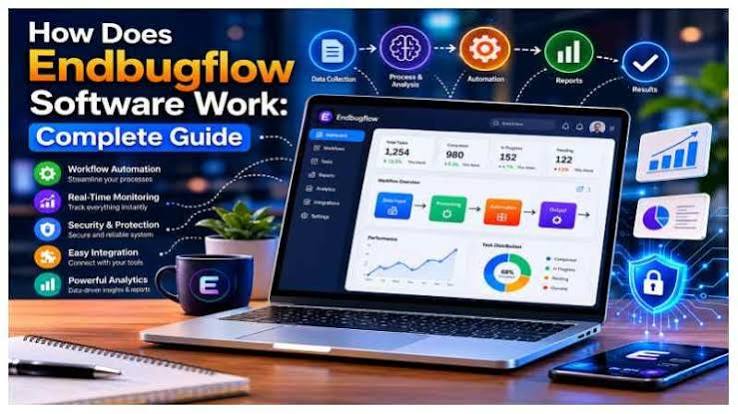
How Does EndBugFlow Software Work?
One of the most common questions is exactly how does EndBugFlow software work in practice.
Step 1: Bug Detection
Issues can enter the system through multiple channels:
- Automated monitoring tools
- User reports
- Testing environments
- Manual submissions by developers
The platform records relevant information automatically.
Step 2: Issue Classification
Each bug receives:
- A severity level
- Priority ranking
- Category assignment
- Responsible team members
This organization helps teams address critical problems first.
Step 3: Workflow Assignment
The software routes issues according to predefined workflows.
For example:
- Bug detected
- Developer assigned
- Code review initiated
- Testing completed
- Deployment approved
- Issue closed
Automation minimizes delays between these stages.
Step 4: Collaboration and Resolution
Team members can:
- Add comments
- Share files
- Track progress
- Request reviews
- Verify fixes
This collaborative environment improves efficiency.
Step 5: Reporting and Analysis
Once resolved, data remains available for future analysis, helping organizations identify recurring problems and optimize development practices.
Technical Overview in Simple Language
From a technical perspective, EndBugFlow software functions as a central management system connecting various development processes.
Its architecture generally includes:
Data Collection Layer
Collects information from:
- Applications
- Test environments
- User feedback systems
- Monitoring tools
Processing Engine
The engine analyzes incoming issues and automatically categorizes them according to predefined rules.
Workflow Automation Module
This component manages:
- Task assignments
- Notifications
- Status updates
- Approval sequences
Reporting Dashboard
Users access real-time insights through visual dashboards and analytics tool,
Benefits of Using EndBugFlow Software
Organizations adopt workflow-driven debugging platforms because of their many advantages.
Faster Problem Resolution
Automated workflows reduce delays and accelerate issue handling.
Better Team Productivity
Developers spend less time on administrative work and more time writing quality code.
Improved Software Quality
Consistent debugging processes lead to fewer production errors.
Greater Visibility
Managers gain complete visibility into:
- Active issues
- Team workloads
- Resolution timelines
- Project health
Reduced Operational Costs
Efficient debugging lowers maintenance expenses over time.
Practical Use Cases
The technology can support numerous scenarios.
Enterprise Software Development
Large organizations use workflow systems to coordinate multiple development teams.
SaaS Applications
Software-as-a-Service providers rely on rapid issue resolution to maintain customer satisfaction.
Mobile App Development
Mobile teams can automate testing and bug management processes.
DevOps Environments
Integration with CI/CD pipelines helps maintain continuous deployment practices
Popular Mods or Tools Related to EndBugFlow Software
Although EndBugFlow itself may vary depending on implementation, several complementary tools enhance similar debugging workflows.
Automated Testing Frameworks
These tools perform:
- Unit testing
- Integration testing
- Regression testing
Workflow Extensions
Additional modules can provide:
- Custom reporting
- Advanced analytics
- Team communication features
Monitoring Solutions
Application monitoring systems help detect problems before users encounter them.
Tools How Does EndBugFlow Software Work with Gaming Mods Guide and Mod Configuration
For developers creating gaming applications, workflow management tools often integrate with:
- Mod configuration systems
- Gaming mods guide utilities
- Automated testing environments
- Version control solutions
These integrations support faster development cycles.
How to Get Started
If you’re interested in learning how does EndBugFlow software work firsthand, getting started is relatively straightforward.
Installation or Access Guide
Typical setup steps include:
- Download or access the software platform.
- Create a project workspace.
- Configure user permissions.
- Connect external tools.
- Establish debugging workflows.
- Begin tracking issues.
Tips for Beginners
New users should:
- Start with simple workflows.
- Use built-in templates.
- Learn automation gradually.
- Monitor analytics regularly.
- Document team processes.
These practices improve adoption and long-term success.
Pros and Cons
Every solution offers both strengths and limitations.
Pros
- Automated bug management
- Improved collaboration
- Flexible workflows
- Better reporting capabilities
- Increased productivity
- Scalable architecture
Cons
- Initial setup may require planning
- Advanced automation can have a learning curve
- Team training may be necessary
- Integration complexity varies by environment
A balanced evaluation helps organizations determine whether the platform fits their needs.
Common Issues and Troubleshooting
Users occasionally encounter challenges when implementing workflow systems.
Workflow Configuration Errors
Problem: Tasks are not moving between stages properly.
Solution:
- Verify automation rules.
- Review permission settings.
- Test workflow configurations before deployment.
Integration Problems
Problem: External tools fail to synchronize.
Solution:
- Check API connections.
- Update software versions.
- Confirm authentication credentials.
Performance Slowdowns
Problem: Large projects cause delays.
Solution:
- Archive completed issues.
- Optimize database settings.
- Reduce unnecessary automation triggers.
User Permission Conflicts
Problem: Team members cannot access certain functions.
Solution:
- Review role assignments.
- Update access permissions.
- Standardize user management policies.
Future of EndBugFlow Software
The future of workflow-driven debugging solutions looks promising.
Artificial Intelligence Integration
AI-powered systems may automatically:
- Predict software defects
- Recommend fixes
- Prioritize issues
- Generate reports
Smarter Automation
Future versions will likely offer more intelligent workflow customization based on project behavior.
Cloud-Native Development
As cloud technologies expand, debugging platforms will continue integrating with distributed development environments.
Enhanced Analytics
Advanced reporting tools may provide deeper insights into software quality and team performance.
Conclusion
Understanding how does EndBugFlow software work helps developers and organizations appreciate the value of workflow-based debugging solutions. By combining automation, collaboration, analytics, and structured processes, these platforms simplify software maintenance and improve development efficiency.
Key takeaways include:
- EndBugFlow focuses on organized bug management workflows.
- Automation reduces repetitive manual tasks.
- Integration capabilities enhance modern development environments.
- Proper setup and configuration maximize productivity.
- Future innovations will likely incorporate AI and advanced analytics.
Whether you’re a beginner exploring debugging tools or an experienced developer seeking workflow optimization, EndBugFlow concepts offer valuable insights into modern software development practices. Explore available solutions, experiment with configurations, and discover how workflow automation can improve your projects.