
Table of Contents
Introduction
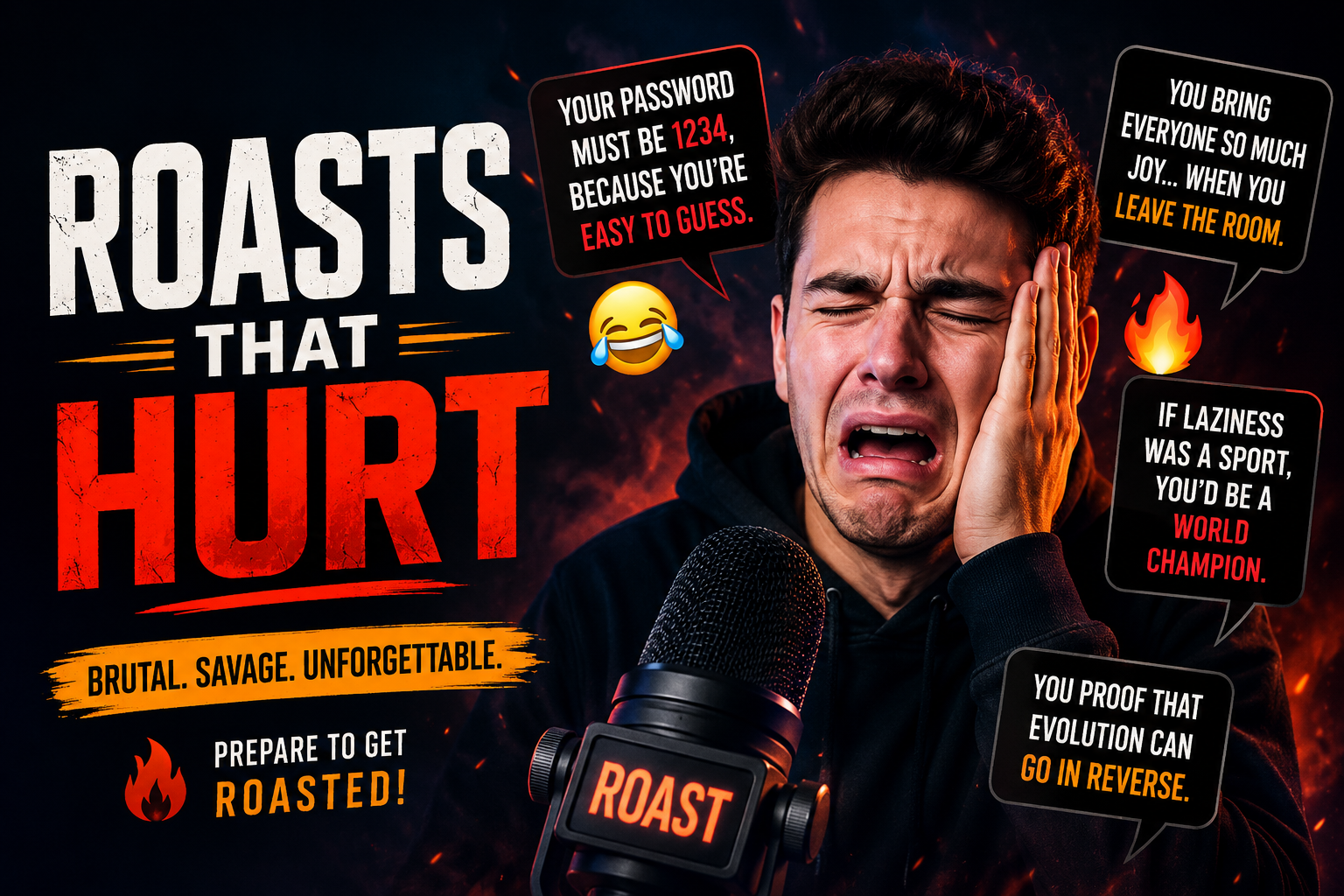
Roasts that hurt have become one of the most searched forms of humor across social media, gaming communities, group chats, and comedy events. Whether you’re watching a comedy roast, scrolling through TikTok, or playing online games, you’ve probably seen people deliver clever insults that leave everyone laughing.
A great roast isn’t just about being mean—it’s about wit, timing, and creativity. The best roasts that hurt are memorable because they’re smart, unexpected, and humorous rather than cruel.
In this guide, you’ll learn what roasts that hurt are, how they work, their benefits, popular roast styles and tools, practical examples, common mistakes, and tips for creating your own clever comebacks.
What Are Roasts That Hurt?
Roasts that hurt are witty, humorous insults designed to make someone laugh while highlighting an embarrassing, funny, or exaggerated characteristic. Unlike bullying, a roast is generally intended as entertainment among willing participants.
These roasts often rely on:
- Clever wordplay
- Sarcasm
- Exaggeration
- Timing
- Observation
The goal isn’t to genuinely hurt someone’s feelings but to create humor through exaggerated criticism.
Definition and Background
Roasting has existed for centuries, but modern roasting became especially popular through stand-up comedy and celebrity roast events.
Today, roasts that hurt appear on:
- TikTok
- Instagram Reels
- YouTube Shorts
- Discord servers
- Online gaming communities
- School and college friend groups
The internet has transformed roasting into a popular entertainment category with thousands of videos and memes shared every day.
Purpose and Relevance in the Roasts That Hurt Community
The popularity of roasts that hurt continues growing because people enjoy quick, clever humor.
Common uses include:
- Friendly banter
- Gaming voice chats
- Comedy performances
- Roast battles
- Social media content
- Icebreaker games
- Entertainment videos
When used respectfully, roasting encourages creativity and quick thinking.
Key Features of Roasts That Hurt
Several characteristics make great roasts that hurt stand out.
Clever Wordplay
Instead of simple insults, effective roasts use intelligent wording.
Example:
“You’re proof that even Google doesn’t have all the answers.”
Humor Over Hate
A successful roast makes everyone laugh—including the target.
Fast Delivery
Timing often matters more than the roast itself.
Quick responses usually have the biggest impact.
Originality
Unique jokes perform much better than copied internet insults.
Relatable References
Modern roasts frequently reference:
- Technology
- Video games
- Movies
- Social media
- Pop culture
- AI
- Smartphones
Main Functionalities of Roasts That Hurt
Although roasting isn’t software, it serves several practical purposes.
Entertainment
Comedy is the primary purpose.
Social Interaction
Roasting often strengthens friendships through playful teasing.
Confidence Building
Learning clever comebacks can improve communication skills.
Content Creation
Many creators build entire channels around roast compilations.
Unique Aspects That Differentiate Roasts That Hurt
Compared to ordinary insults, roasts that hurt focus on:
- Creativity
- Humor
- Intelligence
- Timing
- Delivery
They’re designed to entertain rather than offend.
How Roasts That Hurt Work
Step 1: Observe
Notice something unique or funny.
Example:
- Fashion
- Gaming skills
- Habits
- Funny moments
Step 2: Exaggerate
Take that observation to an extreme for comedic effect.
Step 3: Add Wordplay
A clever twist makes the roast memorable.
Step 4: Deliver with Confidence
Good timing increases the joke’s impact.
Technical Overview (Simple Language)
Think of roasting like building a joke.
Formula:
Observation + Exaggeration + Humor = Great Roast
For example:
Observation:
“They play games badly.”
Exaggeration:
“They couldn’t hit water if they fell out of a boat.”
Humor:
“You make NPCs look competitive.”
Benefits of Using Roasts That Hurt
There are several benefits when roasting stays friendly.
Improves Creativity
Writing clever jokes sharpens creative thinking.
Builds Quick Thinking
Roast battles encourage fast responses.
Creates Entertainment
Funny roasts are highly shareable online.
Makes Conversations Fun
Friends often enjoy playful teasing.
Great for Gaming
Gaming communities frequently use humorous banter during matches.
Practical Use Cases
People use roasts that hurt in many situations.
Examples include:
- Friendly gaming sessions
- TikTok videos
- Discord chats
- School talent shows
- Comedy nights
- YouTube challenges
- Group conversations
Popular Roasts That Hurt Tools
While there aren’t official roasts that hurt tools, several resources help users create funny content.
AI Writing Assistants
AI tools can generate creative roast ideas.
Useful for:
- Inspiration
- Joke writing
- Comedy scripts
Random Roast Generators
Online generators provide instant roast suggestions.
Great for:
- Icebreakers
- Entertainment
- Social media
Meme Creators
Many users combine images with funny roast captions.
Gaming Roast Communities
Players often share gaming-themed roasts that hurt for popular multiplayer games.
Roasts That Hurt Gaming Guide
Gaming communities have developed their own roasting style.
Popular themes include:
- Bad aim
- Slow reactions
- Poor teamwork
- Lag excuses
- Low rankings
Example:
“Even the tutorial gave up on teaching you.”
Mod Configuration
Unlike software, roasts that hurt don’t require actual mod configuration. However, you can customize your style by:
- Using gaming references
- Adding movie quotes
- Including meme culture
- Creating original punchlines
- Matching your audience’s sense of humor
How to Get Started
Learning to create roasts that hurt takes practice.
Step 1
Watch professional comedians.
Step 2
Study clever wordplay.
Step 3
Practice writing original jokes.
Step 4
Keep your humor light-hearted.
Tips for Beginners
- Never attack personal trauma.
- Avoid discriminatory jokes.
- Focus on funny observations.
- Use clever wording.
- Practice timing.
- Know your audience.
Pros and Cons
Pros
- Highly entertaining
- Improves creativity
- Builds confidence
- Encourages quick thinking
- Great for social events
- Popular on social media
Cons
- Can offend people
- Requires good timing
- Not everyone enjoys being roasted
- Easy to cross the line into bullying
- Context matters
Common Issues and Troubleshooting
Roast Falls Flat
Solution:
Use more originality instead of recycled internet jokes.
Accidentally Offending Someone
Solution:
Know your audience and avoid sensitive topics.
Running Out of Ideas
Solution:
Read comedy, watch roast battles, and practice writing regularly.
Sounding Mean Instead of Funny
Solution:
Aim for cleverness rather than cruelty.
Best Practices
To improve your roasting skills:
- Keep it playful.
- Avoid personal insecurities.
- Don’t repeat old jokes.
- Be creative.
- Laugh at yourself too.
- Respect boundaries.
Future of Roasts That Hurt
The popularity of roasts that hurt is expected to continue growing.
Emerging trends include:
- AI-generated roast ideas
- Interactive comedy apps
- Live streaming roast battles
- Gaming community competitions
- Short-form video content
- Personalized roast generators
As online entertainment evolves, roasting will likely become even more creative and interactive.
Frequently Asked Questions
Are roasts that hurt the same as bullying?
No. A roast is meant to be humorous and is typically shared between willing participants. Bullying is intended to harm or intimidate someone.
Can beginners learn to create good roasts?
Yes. Practice, observation, and studying comedy can help anyone improve their roasting skills.
Are AI tools useful for creating roasts?
Yes. AI can provide inspiration, but the funniest roasts are usually personalized and original.
Where are roasts most popular?
They are commonly found on social media platforms, gaming communities, comedy shows, and friendly gatherings.
Conclusion
Roasts that hurt are a unique form of comedy that combines creativity, timing, and clever wordplay. When used responsibly, they can make conversations more entertaining, improve quick thinking, and create memorable moments among friends.
The key to a great roast is balancing humor with respect. Focus on clever observations rather than personal attacks, know your audience, and remember that the goal is laughter—not harm.
If you’re ready to sharpen your wit, start exploring roasts that hurt, practice writing your own jokes, and experiment with different styles to develop your own signature comedic voice.